
There’s a point in spring when Washington State stops feeling grey.
If you’ve ever been to Seattle in late winter, you’ll know what I mean: the skies linger somewhere between cloudy and moody, the air is cool, and everything feels like it’s waiting for something to happen.
Then April arrives, and about an hour north of the city, Skagit Valley quietly transforms.
Fields that looked like ordinary farmland just weeks ago suddenly fill with rows of tulips, bright reds, soft pinks, deep purples, yellows so vivid they almost don’t look real. And it’s not just one field. It’s miles away.
You don’t really “arrive” at the tulips. You start noticing them slowly as you drive in, and then all at once, you realize you’re surrounded.
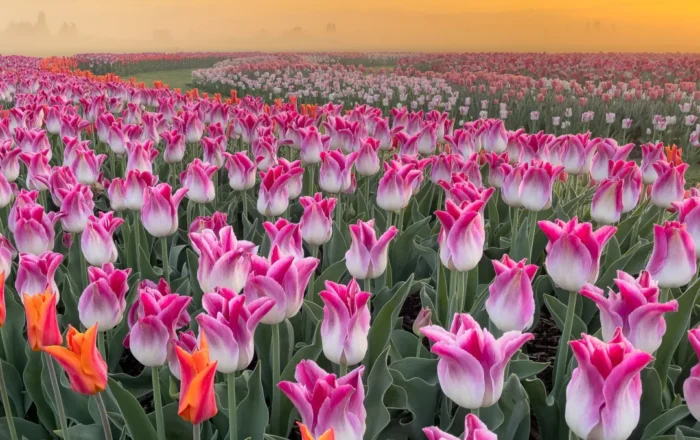
The First Time You See the Fields
Most people head toward the farms around Mount Vernon, and honestly, that’s the easiest way to start.
But what makes Skagit special isn’t just one location, it’s the entire area. You’ll be driving down a normal road, and suddenly there’s a stretch of color running alongside you. Then another. Then another.
Eventually, you’ll pull over without planning to.
That’s kind of how the whole experience works here. It’s less about following a strict route and more about letting the fields guide you.
When to Go (and why timing matters more than anything)
Tulips don’t follow a calendar. They follow the weather.
Most years, the bloom peaks sometime in April, but it shifts slightly depending on how early spring arrives. Some seasons lean toward early April, others stretch into the last week.
If you’re planning ahead, it’s worth checking bloom updates from the Skagit Valley Tulip Festival website or even their social media. Locals track it closely because the difference between “almost blooming” and “perfect” can be just a few days.
Morning visits feel calmer, especially on weekdays. The fields are quieter, the light is softer, and you don’t feel rushed. Late afternoon has its own charm as the colors deepen, and everything takes on a warmer tone.
Midday? That’s when it gets busy. Still beautiful, just more people, more movement.
Getting There Without Overcomplicating It
If you’re coming from Seattle, the drive is about an hour to an hour and a half depending on traffic.
You can take I-5 straight up toward Mount Vernon, and from there, signs for the tulip farms start appearing. It’s one of those trips where having a car makes everything easier. You can stop whenever you want, explore different farms, and take your time.
There are tours that run from Seattle if you don’t want to drive, but they tend to move on a schedule. And honestly, Skagit feels best when you’re not watching the clock.
Parking is usually available near the farms, though weekends can get a bit crowded. Nothing too overwhelming, just something to keep in mind.
Walking Through the Tulip Farms (and why each one feels different)
Two of the most popular stops are RoozenGaarde and Tulip Town.
They’re close to each other, but the experience feels slightly different to each.
RoozenGaarde is known for its display gardens, carefully designed sections where tulips are arranged in patterns, colors flowing into each other like a painting. It’s polished, almost curated for photography, but still beautiful in its own way.
Tulip Town feels a bit more open and relaxed. The rows stretch wider, and it feels less structured. You wander more, pause more, and it feels a little less like an attraction and more like a place.
Most farms charge an entry fee usually somewhere around $10 to $20 depending on the season and day. It’s a small price considering how much time you end up spending there.
And honestly, you’ll probably visit more than one farm without even planning to.
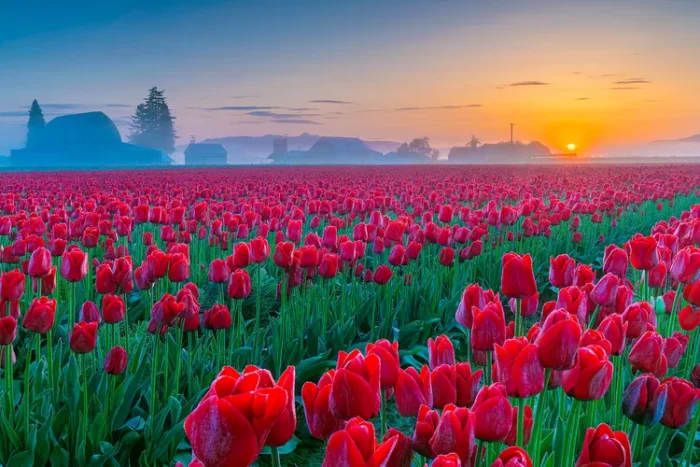
A Day That Doesn’t Feel Rushed
If you start your day early from Seattle, the drive itself feels like part of the experience.
You’ll reach Skagit Valley just as the morning light starts settling over the fields. Spend your first couple of hours just walking, no plan, no rush. Let yourself stop wherever something catches your eye.
By late morning, when the crowds begin to build, it’s a good time to step away for a bit.
The town of La Conner is close by and feels like a completely different world. Small, quiet, and sitting right along the water, it’s the kind of place where you slow down without thinking about it.
Find a café, sit by the window, and just take a break from walking.
If you’re looking for something cozy, Calico Cupboard Café is a local favorite simple, comforting food, nothing too fancy, but exactly what you want after a morning outside. If you want something with a view, there are small waterfront spots where you can sit and watch boats drift by while you eat.
After lunch, head back toward the fields but don’t go straight to the busiest ones. This is the time to explore the quieter roads. Some of the most beautiful views aren’t inside the farms at all, they’re along the edges, where the fields meet the open sky.
Late afternoon is when everything softens again.
The crowds thin slightly, the light warms up, and the colors feel richer. This is when you’ll probably take your favorite photos without even realizing it.
The Kind of Photos That Just Happen
You don’t need to chase “Instagram spots” here.
The rows of tulips naturally lead your eye, the sky adds contrast, and the colors do most of the work. Some of the best shots happen when you step slightly off the main paths or turn around unexpectedly.
Reflections in puddles after a light rain.
A single row of tulips stretching into the distance.
Someone walking through the field ahead of you.
It’s less about perfect composition and more about noticing what’s already there.
Little Things That Make the Day Better
Spring in Washington can be unpredictable. It might be sunny in the morning and slightly chilly an hour later. A light jacket usually helps, especially if you’re staying into the evening.
Shoes matter more than you think. Some paths can get a bit muddy, especially after rain, and you’ll be walking more than expected.
And maybe the simplest tip is don’t try to do too much. Skagit isn’t meant to be rushed. It’s one of those places where the best moments happen when you’re not moving too fast.
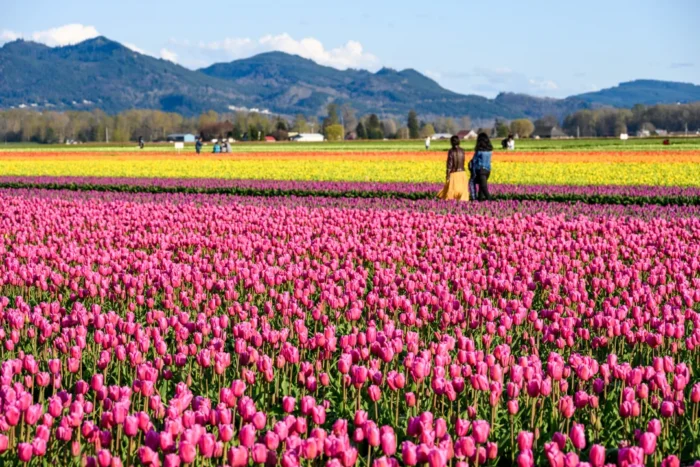
Why Skagit Valley Stays With You
There are places that impress you.
And then there are places that stay with you quietly.
Skagit Valley feels like the second kind.
Maybe it’s because the flowers only bloom for a short time. Maybe it’s because the experience is so simple just walking, looking, breathing fresh air.
Or maybe it’s because nothing here feels forced. There’s no pressure to see everything, no need to follow a strict plan.
You just arrive, wander, and somehow, that’s enough.
