
There’s a very specific moment in Washington, D.C. when everything changes.
It doesn’t happen loudly. There’s no big announcement. But one morning, the trees around the Tidal Basin begin to bloom—and suddenly, the entire city feels softer. Lighter. Almost like it’s paused for a few weeks just to enjoy itself.
If you’ve ever seen photos of cherry blossoms in D.C., you already know how beautiful it looks. But being there feels different. The air is cool but comfortable, people are walking slower than usual, and everywhere you look, there’s this gentle wash of pink and white.
It doesn’t feel like a tourist attraction. It feels like a season you stepped into.
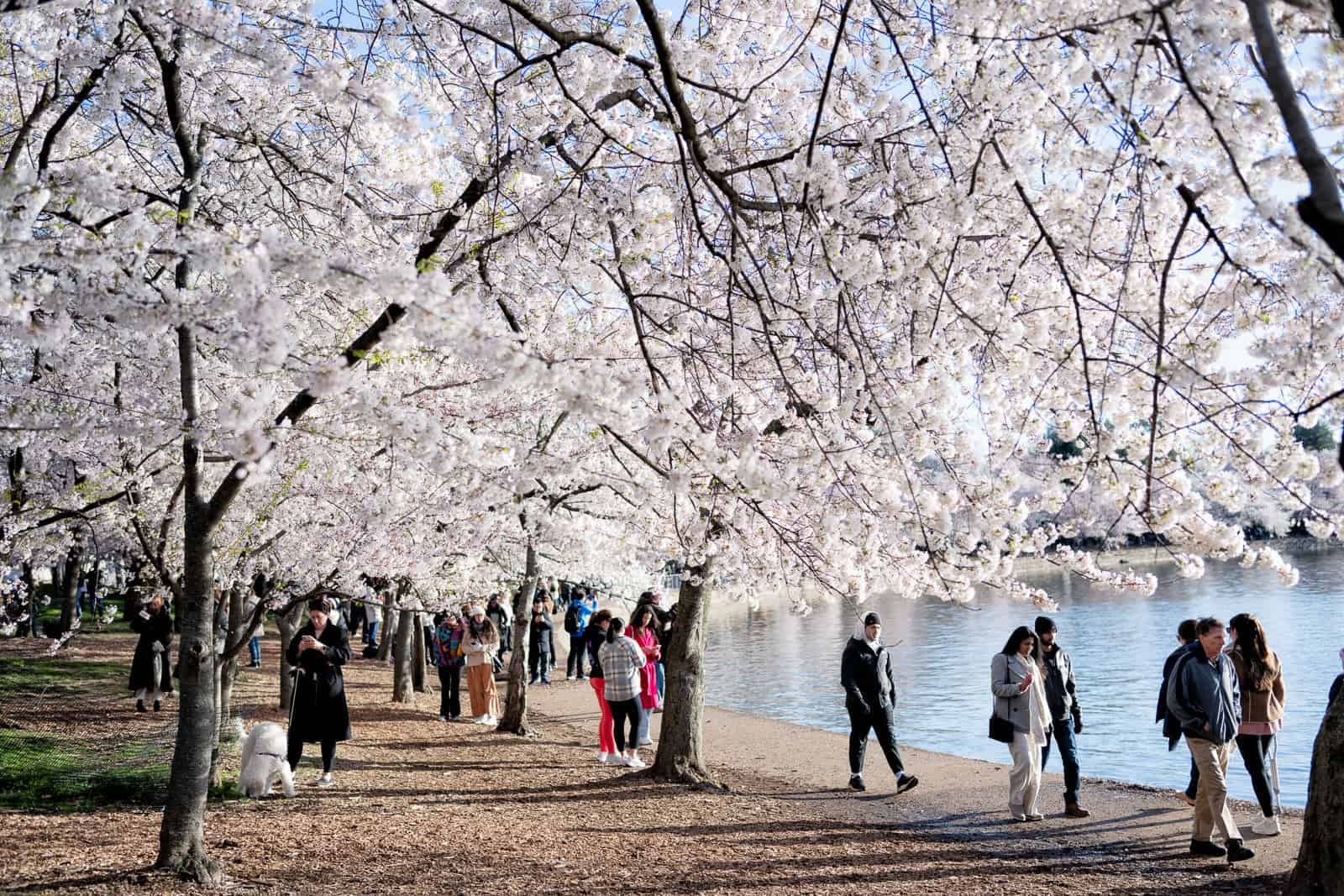
Walking into the Bloom (and realizing photos don’t do it justice)
Most people head straight to the Tidal Basin, and honestly, you should too—but go early. Not just early, but really early. Around sunrise, the entire area feels almost unreal. Fewer people, softer light, and the kind of quiet that makes you stop mid-walk just to take it in.
The first time you see the cherry trees lining the water, it doesn’t hit all at once. You notice one branch, then another, and then suddenly you realize you’re surrounded.
The Jefferson Memorial in the background somehow makes everything look even more cinematic. It reflects in the water, framed by blossoms, and for a moment you’ll probably just stand there wondering where to even point your camera.
If you’re thinking about Instagram photos, this is one of those rare places where you don’t need to try too hard. Almost every angle works. But if you want that clean, dreamy shot, try standing along the curve of the basin with the trees arching slightly overhead—it naturally frames everything.
The Spots You’ll Keep Coming Back To (Even Without Realizing It)
What’s interesting about cherry blossom season in D.C. is that you don’t just visit one spot and leave. You sort of drift between places.
After the Tidal Basin, most people naturally walk toward the Martin Luther King Jr. Memorial. It’s quieter, more open, and the blossoms feel less crowded here. The stone monument against the soft pink trees creates a contrast that photographs beautifully, but it’s also just a nice place to pause.
A little further along, the Franklin Delano Roosevelt Memorial feels completely different. It’s more tucked away, with pathways, waterfalls, and small pockets of space where the blossoms peek through. This is where you’ll find those slightly less obvious photos—the ones that feel more personal.
If you keep walking, you’ll end up near the Washington Monument, and this is where things open up. The blossoms aren’t as dense here, but the wide view of the monument with scattered cherry trees gives a different kind of perspective. It’s less about close-up beauty and more about the scale of the city in spring.
And then there’s Hains Point, which not everyone talks about. It’s a bit more spread out, quieter, and honestly, one of the best places if you just want to sit somewhere without feeling rushed. The blossoms here feel less “photographed” and more lived in.
The Kind of Photos That Feel Effortless
You’ll notice something quickly—this isn’t a place where you need to hunt for the perfect photo.
The light does most of the work for you.
Morning light is soft and slightly golden, which makes the blossoms look almost pastel. Late afternoon, just before sunset, adds a warmer tone that makes everything glow. Midday is brighter and busier, but even then, the sheer number of trees means you’ll still find your moment.
One thing that helps is not rushing. Walk slowly. Look for reflections in the water. Notice how the branches frame the sky.
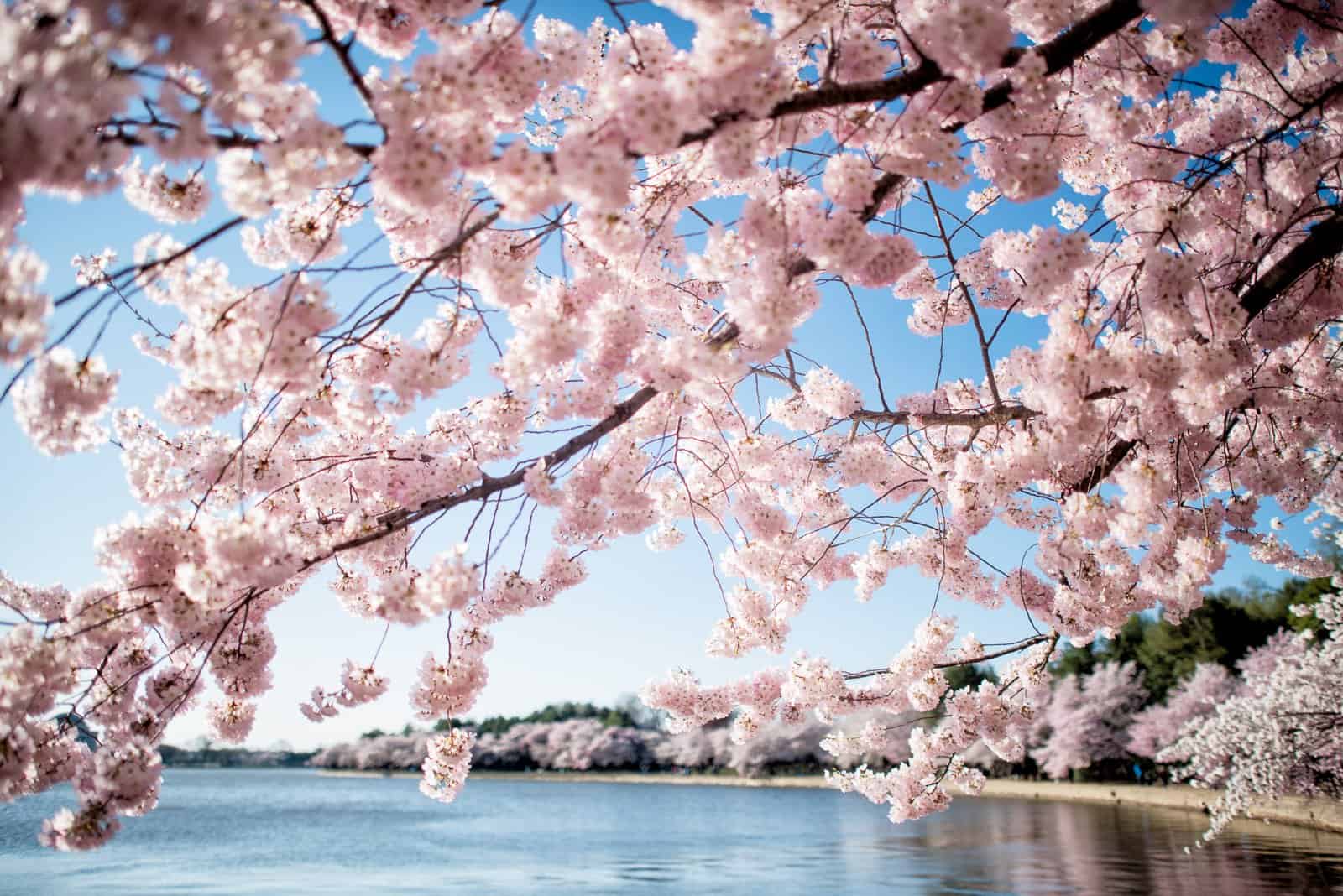
Getting Around the City Without Overthinking It
D.C. is surprisingly easy to move around, especially during cherry blossom season when walking becomes part of the experience.
Most of the main blossom spots are clustered around the National Mall, which means you can cover a lot just by walking. In fact, walking is probably the best way to take it all in—you notice more, you stop more, and you don’t feel like you’re rushing between points.
If you’re staying a bit farther out, the Metro is simple and reliable. Stations like Smithsonian or L’Enfant Plaza drop you close enough to the main areas without needing much navigation.
For shorter distances, scooters and bikes are everywhere. Renting a bike and riding along the Tidal Basin early in the morning is actually one of those underrated experiences—it feels calm, almost private, before the crowds arrive.
Timing Makes More Difference Than You Think
Cherry blossom season doesn’t last long. That contributes to its uniqueness.
Peak bloom usually happens sometime between late March and early April, but it shifts slightly every year depending on the weather. And once the blossoms are fully open, they don’t stay that way for long.
Wind or rain can bring the petals down within days.
If you’re planning your trip, try to keep a little flexibility. Even being there just before or just after peak bloom can still be beautiful in different ways. Early bloom feels fresh and quiet. Late bloom, when petals start falling, almost feels like snow.
The Little Moments You Don’t Plan For
Some of the best parts of visiting D.C. during cherry blossom season aren’t the big landmarks.
It’s sitting on the grass with a coffee while petals fall around you.
It’s walking without a destination and ending up somewhere beautiful.
It’s noticing how even locals seem to slow down a bit.
You’ll probably take a lot of photos—but what stays with you isn’t just what you captured. It’s how it felt to be there in that moment, when the city felt softer than usual.
Why This Experience Feels Different
There are plenty of places in the world with flowers.
But there’s something about Washington, D.C. in spring that feels different. Maybe it’s the contrast between the structured monuments and the softness of the blossoms. Maybe it’s the history behind the trees. Or maybe it’s just the timing—how it arrives right when people are ready for something lighter.
Whatever it is, it’s one of those trips that doesn’t need much explaining afterward.
You go, you walk, you look around—and somehow, that’s enough.
A Day That Feels Like Spring in D.C.
If you’re only in Washington, D.C. for a short time during cherry blossom season, don’t try to do everything. The beauty of this experience is in slowing down and letting the day unfold naturally.
Start early—earlier than you think.
The city feels completely different at sunrise. There’s a quiet stillness around the Tidal Basin that disappears within a couple of hours. The light is soft, the water is calm, and the blossoms almost glow in that early morning haze. It’s the kind of moment where you don’t feel like you need to talk much—you just walk, take it in, and maybe stop every few steps because something catches your eye.
After spending time around the Jefferson Memorial, slowly make your way along the basin. You’ll pass stretches where the trees hang lower, creating little pockets that feel almost hidden. This is usually when you’ll find your favorite photos—when you’re not trying too hard, just noticing.
By mid-morning, the city starts to wake up.
This is a good time to step slightly away from the main crowd. Walk toward the FDR Memorial or the MLK Memorial, where things feel a bit more open. Grab a coffee from a nearby café, sit somewhere along the path, and just watch people pass by. There’s something surprisingly nice about doing nothing for a while here.
Around late morning, you can wander toward the Washington Monument. The space opens up, the crowds spread out a bit, and you get a different perspective of the blossoms against the skyline. It’s less intimate than the basin, but it balances the day.
By lunchtime, you’ll probably feel like taking a proper break. Head toward a nearby café or even pack something simple and sit on the grass. A picnic here, even an unplanned one, feels very “spring in D.C.”
The afternoon is where you slow down even more.
Instead of chasing spots, this is the time to revisit what you liked. Maybe you go back to a quieter stretch near the basin. Maybe you explore Hains Point, where things feel less crowded and more relaxed. This part of the day is less about seeing and more about feeling.
As evening approaches, the light changes again—and so does the mood.
Sunset around the Tidal Basin is warmer, softer, and a little more emotional. The crowds are still there, but it doesn’t feel chaotic. People linger. Conversations slow down. The blossoms take on a slightly golden tone, and everything feels like it’s winding down gently.
If you stay just a little longer, you’ll notice something subtle. As the sky darkens, the monuments begin to glow, and the trees fade into silhouettes. It’s quieter again, in a different way than the morning.
And somehow, that feels like the perfect way to end the day.
