
Seattle sits in the Pacific Northwest of the United States, bordered by Puget Sound to the west and Lake Washington to the east, with mountain ranges framing the city in nearly every direction. It is a coastal city shaped as much by water and weather as by technology, trade, and long-standing local routines.
Known globally for coffee culture, major technology companies, and a recognizable skyline, Seattle often gets reduced to a short list of landmarks. What is less immediately visible is how layered the city actually is. Residential neighborhoods operate at their own pace, daily life is influenced by seasonal light and rain rather than crowds, and access to nature is not a side activity but part of the city’s structure.
Seattle works well for solo travelers who like independent movement, couples interested in food and scenery without constant scheduling, and families comfortable with walkable neighborhoods and short day trips. It is not a city that rewards rushing. It rewards attention, patience, and a willingness to experience both urban and natural spaces in the same day.
What Seattle Feels Like
Seattle’s daily rhythm is quieter than many major US cities. Mornings begin early in residential areas, especially on weekdays, while nightlife remains concentrated in specific neighborhoods rather than spread evenly across the city.
The presence of water affects how people move. Ferries function as part of public transit, waterfront paths are used year-round, and views across bays and lakes are part of everyday commutes. Weather plays a defining role. Overcast days are common, particularly from late fall through early spring, and locals tend to adapt rather than resist it. Outdoor life continues, just at a slower and more deliberate pace.
Tourist-heavy zones feel active and structured, especially during summer. Step a few streets away and the atmosphere changes quickly. Cafés fill with people working quietly, residential streets remain calm, and parks are used more for walking and reflection than large gatherings. This contrast between activity and restraint defines much of Seattle’s character.
How to Reach Seattle
By Air
Seattle is served by Seattle-Tacoma International Airport, commonly called Sea-Tac. It handles a high volume of domestic and international flights and is located about 14 miles south of downtown.
Public transport options include light rail, buses, and ride-hailing services. Light rail is the most consistent option for reaching downtown without traffic delays.
By Train
Amtrak connects Seattle to cities such as Portland and Vancouver, Canada. Train travel is slower than flying but offers scenic coastal and forested views, especially along the Cascades route.
By Road
Driving into Seattle is practical for regional travel, though traffic congestion can be significant during peak hours. Parking availability varies by neighborhood, and many central areas rely on paid street parking or garages.
Top Places to Visit in Seattle
Pike Place Market
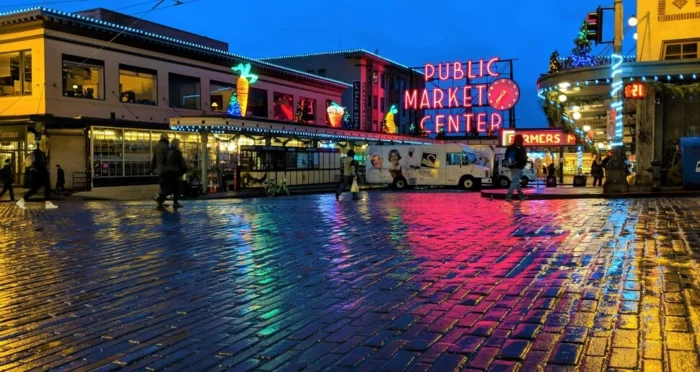
One of the oldest continuously operating public markets in the United States, Pike Place Market is a working marketplace rather than a curated attraction. Fishmongers, produce stalls, small eateries, and specialty shops operate alongside one another in a layered, sometimes crowded space.
Cost: Free to enter
Best time to visit: Before 9 AM
Good for: First-time visitors, food-focused travelers
Practical tip: Explore the lower levels for quieter shops and seating areas.
Space Needle
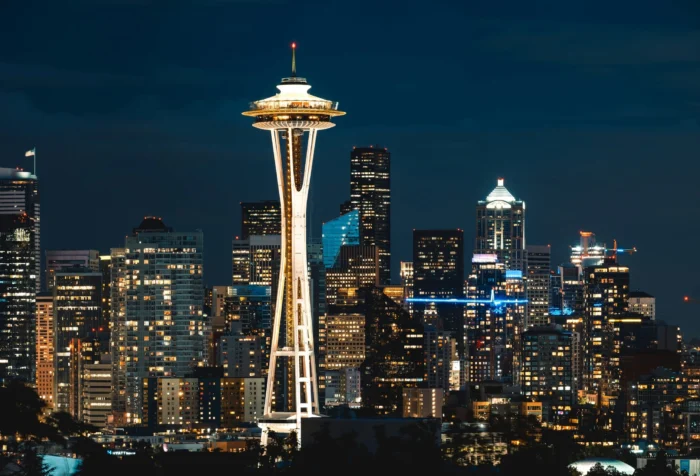
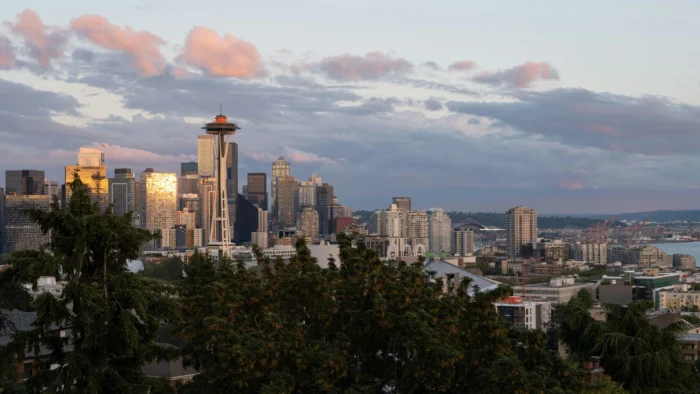
Built for the 1962 World’s Fair, the Space Needle remains a defining feature of Seattle’s skyline. The observation deck offers panoramic views of the city, surrounding water, and distant mountains on clear days.
Cost: ~$35–$45
Best time to visit: Evening
Good for: Couples, first-time visitors
Practical tip: Check weather forecasts before booking to ensure visibility.
Seattle Waterfront
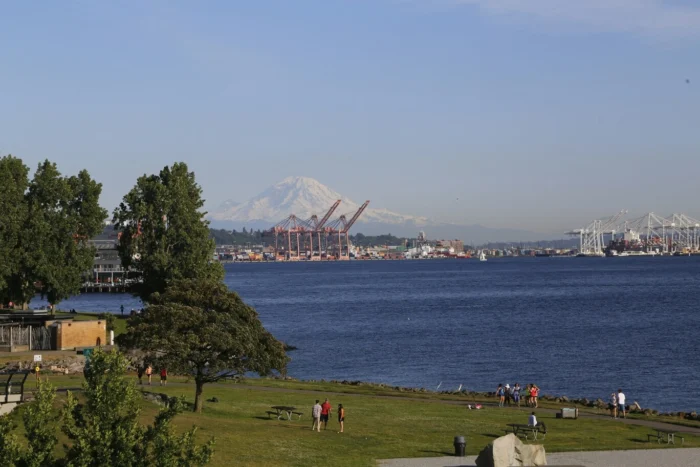
Running beside Elliott Bay, the waterfront is organized around a series of piers and pedestrian routes, with ferry docks and informal food spots integrated into the shoreline.
Cost: Free to explore
Best time to visit: Late afternoon
Good for: Solo travelers, families
Practical tip: Combine with a ferry ride for a different perspective of the city.
Chihuly Garden and Glass
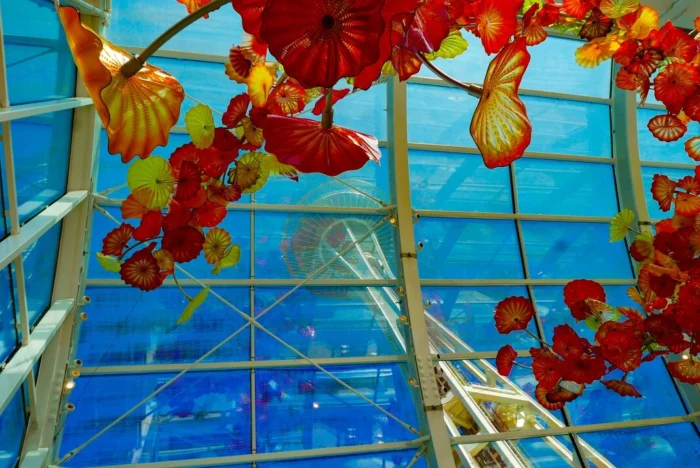
This exhibition showcases large-scale glass installations by artist Dale Chihuly. The indoor and outdoor spaces are designed to complement Seattle’s light conditions.
Cost: ~$35
Best time to visit: Midday or early evening
Good for: Art-focused travelers
Practical tip: Pair with a Space Needle visit due to proximity.
Kerry Park
A small park on Queen Anne Hill, Kerry Park offers one of the most photographed views of Seattle, including the Space Needle and Mount Rainier on clear days.
Cost: Free
Best time to visit: Sunset or early evening
Good for: Photographers, couples
Practical tip: Arrive early during peak hours to avoid crowding.
Underrated Places Worth Time
Ballard
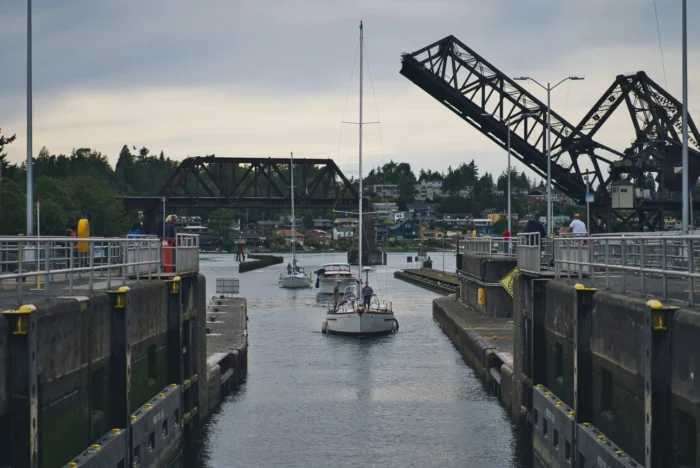
Once a Scandinavian fishing district, Ballard now balances residential streets with cafés, independent shops, and access to the water. The neighborhood feels lived-in rather than tourist-driven.
Why it’s worth visiting: Walkability, food scene, access to coastal parks
Best time: Late morning or early evening
Discovery Park
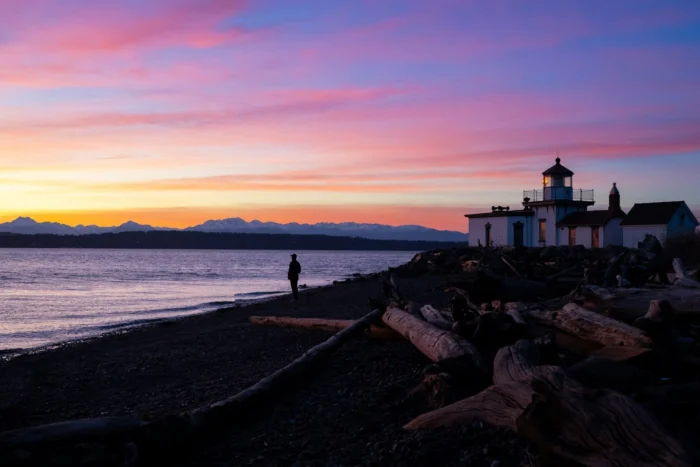
Seattle’s largest park offers forested trails, open meadows, and coastal views. Despite its size, it remains relatively quiet compared to central attractions.
Why it’s worth visiting: Solitude, nature access
Best time: Morning or weekday afternoons
Fremont
Known for public art and a slightly unconventional character, Fremont blends residential calm with creative spaces and waterfront paths.
Why it’s worth visiting: Independent shops, relaxed atmosphere
Best time: Afternoon walks
University District
Anchored by the University of Washington, this area combines bookstores, affordable food options, and seasonal cultural activity.
Why it’s worth visiting: Budget-friendly dining, youthful energy
Best time: Weekdays
How to Pick the Best Area to Stay in Seattle
Choosing accommodation in Seattle depends largely on preferred pace and access rather than proximity to a single attraction. Public transport connectivity and walkability matter more than centrality.
Best Area for First-Time Visitors: Downtown / Belltown
Best for: Structured sightseeing and short stays
Why it works: Easy access to Pike Place Market, the waterfront, and major transit lines
What to look for:
· Walkable streets
· Access to light rail or bus routes
· Soundproofed rooms due to traffic noise
Best Area for Couples: Capitol Hill
Best for: Dining, neighborhood walks, evening activity
Why it works: Restaurants, cafés, and parks within walking distance
What to look for:
· Boutique hotels or serviced apartments
· Proximity to public transport
· Quiet side streets
Best Area for Solo Travelers: Fremont or Ballard
Best for: Independent movement and relaxed routines
Why it works: Independent-friendly cafés with reliable seating and easy access to shoreline walks
What to look for:
· Local cafés nearby
· Walkable access to parks
· Bus connectivity
Budget-Friendly Areas: University District, Northgate
Best for: Students, longer stays, road travelers
Why it works: Lower accommodation costs and reliable transit
What to look for:
· Light rail access
· Grocery stores nearby
· Safe, well-lit streets
Must-Eat Food Experiences in Seattle
· Fresh seafood chowder – ~$10–$18
· Salmon dishes (grilled or smoked) – ~$20–$35
· Teriyaki meals (local staple) – ~$12–$18
· Artisan coffee and pastries – ~$4–$8
· Farmers’ market produce and snacks – ~$5–$15
Seattle’s food culture emphasizes sourcing and simplicity. Vegetarian and vegan options are widely available across neighborhoods.
Day Trips From Seattle
Mount Rainier National Park
Distance: ~2.5 hours
Why go: Dramatic alpine landscapes, clearly marked hiking trails, and seasonal wildflower meadows that change character through the summer. The area supports a range of trail options, from brief, well-marked paths close to main facilities to more demanding routes suited to seasoned hikers.
Best time: July to September, when roads and trails are fully accessible
Bainbridge Island
Distance: 35-minute ferry
Why go: A compact island setting with a walkable town center, quiet residential streets, galleries, and shoreline paths. The ferry ride itself adds value, offering consistent views back toward the Seattle skyline.
Best time: Year-round, with calmer conditions in late spring and early fall
Snoqualmie Falls
Distance: ~45 minutes
Why go: One of the region’s most accessible natural landmarks, with maintained viewing platforms and short walking paths. It works well as a half-day outing or a brief stop paired with nearby towns.
Best time: Spring and early summer, when water flow is strongest
How Many Days Are Ideal
3 days: Core neighborhoods and major landmarks
5 days: City plus one or two day trips
7 days: Seattle with surrounding nature at a relaxed pace
Sample 5-Day Itinerary
Day 1: Arrival and Downtown Orientation
Morning
Arrive in Seattle, check in or leave luggage at your accommodation, and take a short walk nearby to get oriented.
Afternoon
Visit Pike Place Market, focusing on the lower levels and side corridors. Continue toward the waterfront for a slow walk along the piers and ferry terminals.
Evening
Walk through Belltown, choose a casual restaurant, and keep the evening light to recover from travel.
Approximate daily cost: $55–$80
(Food $30–$45, local transport $10–$15, small purchases/coffee $10–$20)
Day 2: Seattle Center and Queen Anne
Morning
Head to Seattle Center. Visit the Space Needle and select one nearby museum based on interest.
Afternoon
Move at a relaxed pace through the surrounding area or take a short break at a nearby café.
Evening
Travel up Queen Anne Hill and spend time at Kerry Park around sunset before returning for dinner.
Approximate daily cost: $75–$110
(Attractions $35–$45, food $30–$45, transport $10–$20)
Day 3: Neighborhood Exploration
Morning
Choose either Capitol Hill or Ballard. Begin with a café visit and a walk through residential streets.
Afternoon
Visit a local park or waterfront path, allowing time to sit and observe rather than move continuously.
Evening
Have dinner within the neighborhood and return at a comfortable pace.
Approximate daily cost: $45–$70
(Food $30–$45, transport $10–$15, coffee/snacks $5–$10)
Day 4: Day Trip
Morning
Depart for either Bainbridge Island by ferry or Snoqualmie Falls by road.
Afternoon
Walk the town center or viewing paths at a slow pace, followed by a simple lunch nearby.
Evening
Return to Seattle and keep the evening free or limited to a short neighborhood walk.
Approximate daily cost:
Bainbridge Island: $50–$75 (ferry $10–$20, food $30–$45)
Snoqualmie Falls: $60–$90 (transport/fuel $20–$35, food $30–$45)
Day 5: Nature and Reflection
Morning
Visit Discovery Park or take a quiet walk near a city lake.
Afternoon
Enjoy a final café stop, light shopping, or time for packing.
Evening
Prepare for departure or enjoy a calm, unstructured final meal before leaving.
Approximate daily cost: $40–$65
(Food $30–$45, transport $5–$10, small purchases $5–$10)
Seattle for Different Travelers
Families: Parks, aquariums, short ferry rides
Couples: Food-focused neighborhoods, viewpoints
Solo travelers: Walkable districts, cafés, coastal paths
Final Take
Seattle is a city built around balance rather than spectacle. Its appeal lies in how urban life and nature coexist without clear boundaries. Travelers who approach Seattle with patience and curiosity tend to find more than landmarks. They find routines, views, and spaces that feel lived in rather than staged.
Seattle works best when you approach it with clear planning, realistic pacing, and time left open for everyday moments rather than constant sightseeing.
