
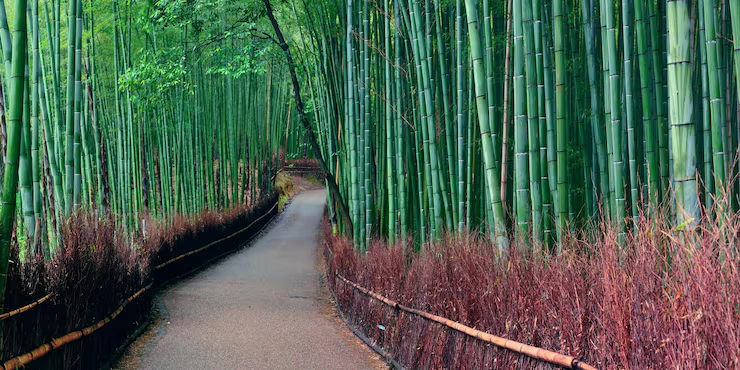
Few places in Japan feel as instantly transporting as the Arashiyama Bamboo Grove. Walking through its towering green stalks, with light filtering softly from above and bamboo leaves whispering in the wind, feels less like sightseeing and more like stepping into another world. Located on the western edge of Kyoto, Arashiyama offers one of the city’s most iconic and calming experiences—especially for travelers seeking nature, balance, and quiet beauty.
This detailed guide covers everything you need to know about the Arashiyama Bamboo Grove Tour, including its history, cultural significance, best times to visit, nearby attractions, and why this place remains one of Kyoto’s most meaningful landscapes.
Where Is Arashiyama Bamboo Grove?
The Bamboo Grove is located in the Arashiyama district, a scenic area along the Katsura River in western Kyoto. Arashiyama has been a retreat destination since ancient times, prized for its natural beauty and seasonal changes. The bamboo grove itself lies between Tenryu-ji Temple and Okochi Sanso Villa, making it easy to combine with other key attractions.
The History of Arashiyama Bamboo Grove
Arashiyama’s history stretches back over 1,000 years, particularly flourishing during the Heian Period (794–1185), when Kyoto was Japan’s imperial capital. During this era, Arashiyama became a favored retreat for emperors, nobles, and court poets, who visited the area to enjoy moon viewing, seasonal landscapes, and quiet reflection.
Bamboo has long held cultural and practical importance in Japan. Traditionally, it symbolized strength, flexibility, and resilience—able to bend without breaking. Bamboo was used in everyday life for tools, baskets, musical instruments, and even construction, but it also held spiritual significance. In Shinto belief, bamboo is considered a purifying plant, often used to mark sacred spaces.
The bamboo groves in Arashiyama were carefully cultivated over centuries, not as wild forests, but as managed landscapes. The stalks you see today are regularly maintained to preserve the grove’s health, height, and visual harmony. This intentional care is what gives the grove its clean, almost otherworldly appearance.
Cultural and Spiritual Significance
Beyond its beauty, the Arashiyama Bamboo Grove holds deep cultural meaning. In Japanese aesthetics, nature is not meant to overwhelm but to coexist gently with human presence. The grove reflects this philosophy perfectly—tall and powerful, yet calming and orderly.
In 1996, the Japanese Ministry of Environment recognized the sounds of the bamboo grove—the rustling leaves and creaking stalks—as one of the “100 Soundscapes of Japan.” This recognition highlights that the experience here is not only visual, but sensory and emotional.
For many visitors, the grove becomes a place of quiet reflection, making it especially meaningful for slow travelers, solo visitors, and couples.
What to Expect on the Arashiyama Bamboo Grove Walk
The main bamboo path is relatively short—about 400 meters—but the experience feels much longer when walked slowly. The towering bamboo stalks rise high above, forming a natural corridor of green. Sunlight filters down in soft patterns, changing throughout the day.
The path is flat and easy to walk, suitable for all ages. There are no entry fees, gates, or time restrictions, which makes it one of the most accessible experiences in Kyoto.
Best Time to Visit Arashiyama Bamboo Grove
- Best time of day: Early morning (7:00–9:00 AM)
- Best seasons: Spring (April–May) and Autumn (November)
Early mornings offer the quietest experience, before tour groups arrive. Autumn adds warm tones from nearby maple trees, while spring brings fresh greenery and mild temperatures.
Visiting later in the day can be busy, but sunset light adds a soft golden glow that many photographers love.
Nearby Attractions to Combine with the Arashiyama Bamboo Grove
One of the best things about visiting the Arashiyama Bamboo Grove is how effortlessly it connects with other beautiful and meaningful attractions nearby. Together, these spots create a slow, well-balanced half-day experience that blends nature, culture, and scenic travel—without rushing or backtracking.
Here’s how to make the most of your time in Arashiyama.
Tenryu-ji Temple (UNESCO World Heritage Site)
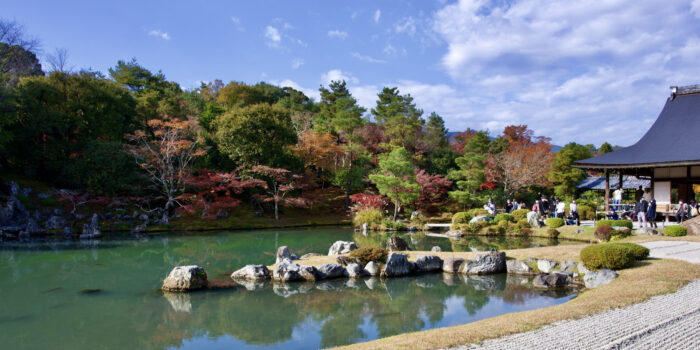
Located right next to the Bamboo Grove, Tenryu-ji Temple is an essential stop and the perfect place to begin or end your walk. Founded in 1339, this Zen temple is one of Kyoto’s most important and is especially admired for its landscape garden, which was designed to reflect the surrounding mountains.
What makes Tenryu-ji special is how naturally it blends architecture and scenery. The garden changes dramatically with the seasons—lush green in summer, golden and red in autumn—yet always feels calm and balanced. The walking paths are gentle, making it suitable for all ages.
Why combine it:
It adds cultural depth and historical context to the natural beauty of the bamboo grove, turning your visit into a complete Zen experience.
Okochi Sanso Villa – A Hidden Garden Escape
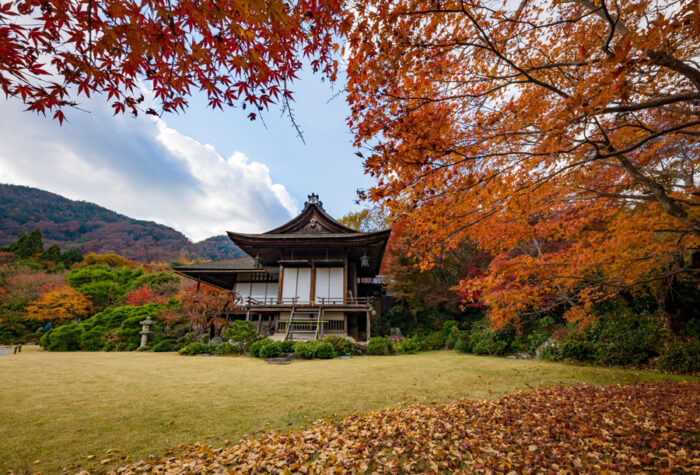
Just beyond the Bamboo Grove lies Okochi Sanso Villa, a lesser-known gem that many travelers miss. This former residence of a famous Japanese film actor features immaculately maintained gardens, winding paths, and panoramic viewpoints overlooking Kyoto.
Unlike the bamboo grove, which can feel busy later in the day, Okochi Sanso offers a quieter, more exclusive atmosphere. The entry ticket includes matcha tea and a sweet, giving you a chance to sit, rest, and absorb the surroundings.
Why combine it:
It offers a peaceful contrast to the grove and rewards visitors with views and serenity that feel deeply personal.
Togetsukyo Bridge – Arashiyama’s Scenic Heart
A short walk from the bamboo grove brings you to Togetsukyo Bridge, one of Kyoto’s most scenic river crossings. Spanning the Katsura River, the bridge frames mountain views that shift beautifully with the seasons—especially during autumn, when the hills glow with fall foliage.
This area feels open and relaxed, perfect for slowing down after walking through the grove. Nearby cafés and riverside paths invite you to linger, take photos, or simply watch the water flow by.
Why combine it:
It provides breathing space, scenic views, and a gentle transition from forest paths to open landscapes.

Sagano Romantic Train & Hozugawa River Boat Ride
For travelers who enjoy scenic journeys, Arashiyama offers two unforgettable experiences just minutes away.
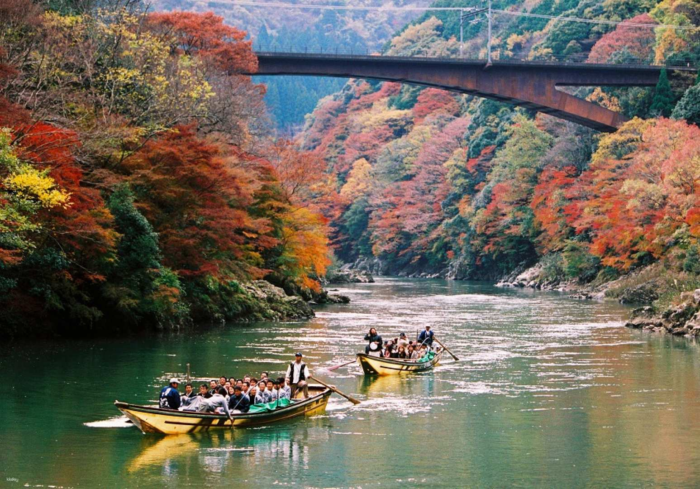
The Sagano Romantic Train runs through wooded valleys and along the Hozugawa River, offering panoramic views—especially stunning in autumn. Alternatively, the Hozugawa River Boat Ride takes you downstream in a traditional wooden boat, surrounded by cliffs, forests, and seasonal colors.
Why combine it:
These experiences shift your perspective from walking to moving through the landscape, adding variety and a sense of timeless travel.
How to Plan It All Together
A relaxed Arashiyama itinerary could look like this:
- Early morning walk through the Bamboo Grove
- Visit Tenryu-ji Temple
- Quiet stroll through Okochi Sanso Villa
- Lunch near Togetsukyo Bridge
- Optional scenic train or river boat ride
Together, these attractions turn Arashiyama into more than a single stop—it becomes one of the most balanced, memorable days in Kyoto.
Is the Arashiyama Bamboo Grove Worth Visiting?
Absolutely—but with the right expectations. The grove is not about length or adventure; it’s about atmosphere. It’s a place to slow down, walk quietly, and let the surroundings speak.
- Solo travelers: Ideal for peaceful reflection and photography
- Couples: Romantic and calming, especially early morning
- Families: Easy walk, open space, and nearby rest spots
Practical Tips for Visiting
- Visit early to avoid crowds
- Walk slowly and listen to the sounds
- Combine with Tenryu-ji for a fuller experience
- Respect the space—keep voices low
Final Thoughts
The Arashiyama Bamboo Grove is more than one of Kyoto’s most photographed locations—it’s a living example of Japan’s relationship with nature. Carefully maintained, culturally significant, and deeply calming, it offers a moment of stillness in a busy travel itinerary.
Whether you visit at dawn, under soft afternoon light, or during autumn’s gentle glow, a walk through the Arashiyama Bamboo Grove is an experience that stays with you long after you leave Kyoto.
This is not a place to rush—it’s a place to feel.
