
Walking through the endless vermillion gates of Fushimi Inari Taisha is one of the most iconic experiences in Kyoto and a must-do for anyone visiting Japan. This sacred trail winds up Mount Inari, passing through thousands of torii gates, forested pathways, hidden sub-shrines, and scenic viewpoints overlooking the city.
Often referred to as the “1,000 Torii Gates Shrine,” Fushimi Inari actually features many thousands of gates donated over centuries by individuals, families, and businesses seeking prosperity and success. Open 24 hours a day and free to enter, this shrine offers a flexible, immersive experience that fits seamlessly into any Kyoto itinerary.
In this blog, we’ll guide you through everything you need to know to plan this remarkable visit; from the best time to go, how to avoid crowds, what to expect, a step-by-step itinerary, and budget tips, with affiliate-friendly suggestions for gear, transport, and accommodation.
Why Fushimi Inari Taisha Is So Famous
Fushimi Inari Taisha is the head shrine of over 30,000 Inari shrines across Japan. Dedicated to Inari, the Shinto deity of rice, agriculture, prosperity, and business success, the shrine dates back to 711 CE, making it one of Kyoto’s oldest and most spiritually significant sites.
One of the shrine’s defining symbols is the fox statue. Foxes, known as kitsune, are believed to be messengers of Inari. You’ll see them holding symbolic items such as keys to rice storehouses, scrolls, or rice sheaves, each representing abundance and protection.
Unlike many temples where worship centers on a single hall, Fushimi Inari’s sacred space extends across the entire mountain. The walk itself is part of the ritual.
When to Visit Fushimi Inari Shrine
Open 24/7 | Free Entry
Yes, you read that right. The shrine never closes, making it ideal for both early risers and night owls.
Best Times:
Early Morning (6:30 AM – 8:30 AM): Magical light, cool breeze, and very few people.
Late Evening (after 7 PM): Peaceful and mystical with lantern-lit pathways.
Seasonal Highlights
- Spring (March–April): Cherry blossoms near the lower shrine grounds
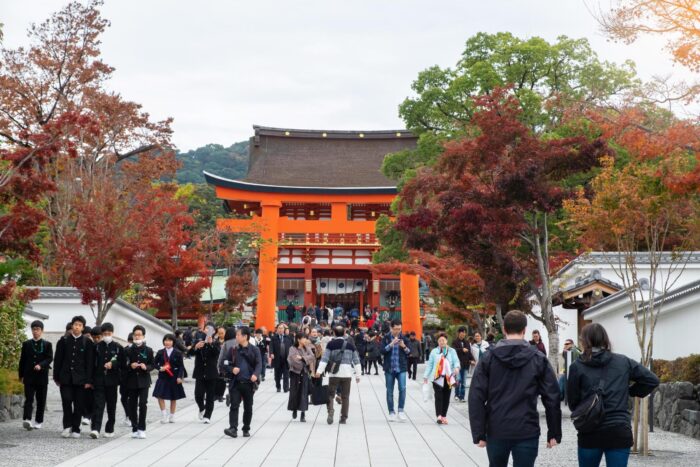
- Autumn (November): Vibrant fall foliage along the mountain trails
When to Avoid
- Late mornings to mid-afternoon on weekends and public holidays tend to be the most crowded.
Budget Breakdown
| Expense | Typical Cost (USD) |
| Shrine entry | Free |
| Local train fare (round trip) | ~$3–5 |
| Snacks & drinks | $5–10 |
| Souvenirs | $5–20 |
| Estimated total | $10–30 |
Get Your Japan Rail Pass or ICOCA Card Here
Location & How to Get There
Address: 68 Fukakusa Yabunouchicho, Fushimi Ward, Kyoto 612-0882
By Train (Most Reliable)
- From Kyoto Station: JR Nara Line → Inari Station (approx. 5 minutes)
- From Gion/Kawaramachi: Keihan Line → Fushimi-Inari Station
Both stations place you just steps from the shrine’s main entrance, no transfers or long walks required.
A Step-by-Step Walking Tour Itinerary (2–3 Hours)
Start: Main Shrine Area (8:00 AM)
Begin at the Romon Gate and the main hall where visitors pray
You’ll see large fox statues, the messengers of Inari, the deity of rice and prosperity
Photo Tip: Stand at the center of the first large torii gate with the mountain visible behind
1st Leg: Senbon Torii – The Famous 1,000 Gates Path (8:30 AM)
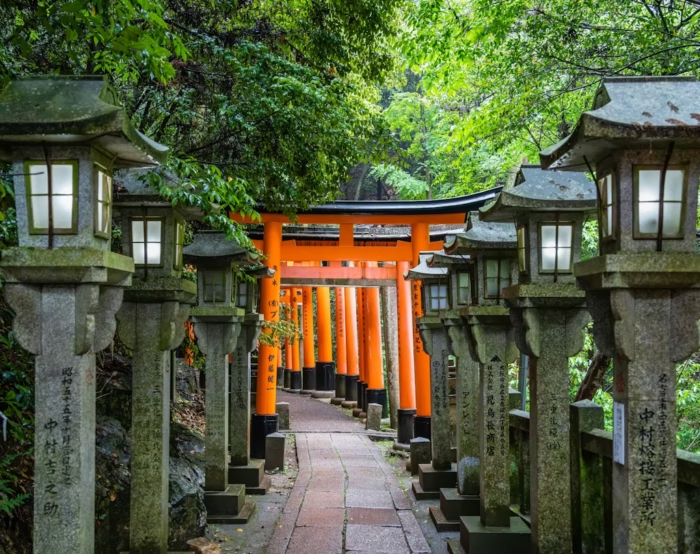
This section is the most famous. Two dense rows of vermillion torii forming a tunnel
The torii are donated by individuals and businesses, and each has names engraved
Tip: After 9 AM, this area gets crowded. Shoot your photos early!
Mid-Point: Yotsutsuji Intersection (9:15 AM)
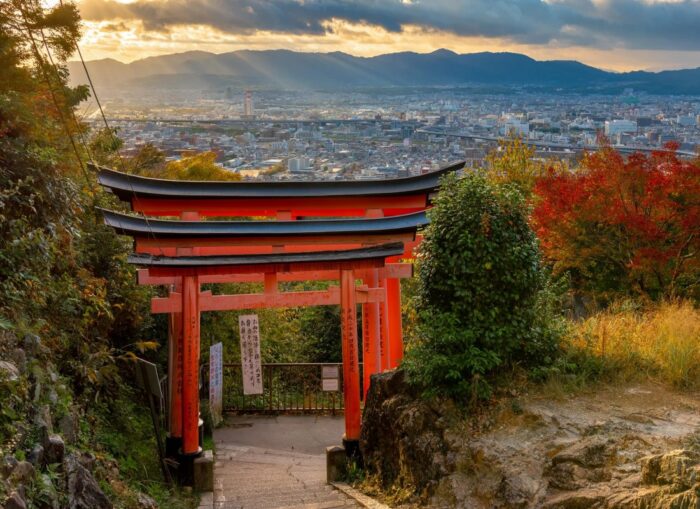
About halfway up, this scenic overlook offers panoramic views of Kyoto
There are benches and vending machines here which are perfect for a water break
Buy a drink from the vending machine with seasonal Sakura tea or roasted green tea
Last Leg: Summit Trail & Hidden Shrines (Optional: 9:30–10:30 AM)
The top of Mount Inari is peaceful, lined with mini-shrines and fox statues
Few tourists go this far. It has a quiet, spiritual atmosphere
Highlight: Mini torii gates for offering, moss-covered altars, tiny lantern-lit paths
Return Loop (Downhill): Different Route for New Views
Descend via the alternative side path (marked at the summit)
You’ll pass hidden shrines, moss gardens, and local offerings
Snack Stop: Near the base, try “Inari Sushi”, sushi wrapped in sweet tofu named after the deity!
What Makes This Experience So Special?
Spiritual Ambience: The forest, fox statues, and shrines create a deeply tranquil atmosphere
Photographic Wonder: Every twist and turn looks like a cinematic shot
Symbolism & Culture: Each torii gate has meaning and memory
Anytime Access: You can walk it at sunrise, in the mist, or under the stars; it never closes
Bonus Tip: Try a sunrise meditation session under the torii alone, it’s life-changing.
Best Photo Spots & Tips
Location | Best Time | Shot Idea
Senbon Torii Tunnel | 7–8 AM | Iconic empty torii gate photo
Yotsutsuji Overlook | Morning light | City in background, foliage in frame
Sub-shrines uphill | Anytime | Candles, fox statues, mini gates
Night Shot (lanterns) | After 7 PM | Glowing gates, mystical vibes
Recommended Camera for Travel Photography (Lightweight Mirrorless)
Where to Stay Near Fushimi Inari
Staying near Fushimi Inari allows repeat visits at different times of day, which dramatically changes the experience. Small boutique hotels and traditional ryokan dominate the area, offering a quieter alternative to central Kyoto.
1. Hotel Ethnography Kiyomizu Gojo
Walkable from the shrine
Modern, stylish Japanese rooms
Essentials to Pack
- Comfortable walking shoes (some inclines and steps)
- Small water bottle or thermos
- Light jacket (can get chilly in mornings)
- Camera or phone with good low-light performance
- Portable hand towel and sunscreen
Final Thoughts
The Fushimi Inari Shrine Walk is much more than a tourist stop; it’s a spiritual retreat wrapped in vermillion and history. Whether you’re wandering under the gates at sunrise or pausing at a hidden shrine halfway up the mountain, you’ll feel a connection that transcends time. If there is one place where movement, culture, and atmosphere come together effortlessly, it’s the torii-lined paths of Fushimi Inari Shrine.
