
If there’s one season that truly shows Kyoto at its most poetic, it’s autumn. As summer fades, the city slowly transforms into a warm palette of reds, oranges, and golds. Temple gardens glow, stone paths crunch under fallen leaves, and the air feels crisp but comforting. A Kyoto autumn foliage walking tour isn’t just a sightseeing activity—it’s an experience that stays with you long after you leave. Whether you’re a seasoned traveler or a first-timer, a Kyoto Autumn Foliage Walking Tour is not just a trip—it’s an experience etched in color, culture, and calm.
This guide is designed to help you plan the perfect autumn walk in Kyoto, whether you’re visiting solo, as a couple, or with family and friends. Below, you’ll find a thoughtfully paced itinerary covering the top 10 foliage spots, along with tips on when to visit, budgeting, and why this experience feels truly once in a lifetime.
Why Kyoto in Autumn? What Makes This Experience So Special?
Autumn in Kyoto is not just about the foliage—it’s the perfect harmony of nature and history. Imagine vibrant maple leaves carpeting the mossy grounds of a 1,200-year-old temple or the warm glow of a lantern-lit path under golden trees at dusk. Autumn enhances this relationship beautifully. Unlike spring’s cherry blossoms—which bloom briefly and draw massive crowds—autumn foliage lingers longer and offers a calmer, more reflective atmosphere.
From mid-November to early December, maple trees (momiji) frame ancient temples, canals, and mountain paths, making Kyoto one of the best autumn destinations in the world.
Kyoto offers:
- Historical landmarks and gardens framed in red and orange
- Crisp weather, ideal for walking
- Seasonal treats like chestnut wagashi (traditional sweets) and matcha parfaits
- Photographer’s paradise — every corner looks like a painting
Unlike the cherry blossom season, autumn is less crowded, giving you more space to breathe and explore.
🗓️ Best Time to Visit
Peak Season: Mid-November to early December
Ideal Dates for 2026: Around November 15 – December 5
Early Risers Win: Visit temples by 8 AM for fewer crowds and soft morning light
🌟 Pro Tip: Weekdays are best. Avoid weekends and national holidays for a peaceful experience.
Top 10 Key Spots for a Kyoto Autumn Foliage Walking
1. Eikando Zenrin-ji Temple
Eikando Zenrin-ji Temple is often considered the most iconic autumn foliage spot in Kyoto, and for good reason. During fall, the temple grounds come alive with hundreds of maple trees turning brilliant shades of red, orange, and gold, creating a scene that feels almost unreal.
Founded over 1,000 years ago, Eikando blends history, architecture, and nature beautifully. What makes this temple special in autumn is how thoughtfully the grounds are designed. As you walk through, maple-lined pathways form natural tunnels of color, with fallen leaves softly covering stone steps and garden paths.
Eikando is easy to include in a walking itinerary and pairs perfectly with nearby spots like Nanzen-ji and the Philosopher’s Path. Whether you’re visiting solo, as a couple, or with family, this temple offers one of the most memorable and visually stunning autumn moments in Kyoto.
Why it’s special: Night illuminations make the leaves glow like fire.

2. Nanzen-ji Temple
Nanzen-ji Temple is one of Kyoto’s most impressive Zen temple complexes and a perfect stop on an autumn foliage walking tour. What makes Nanzen-ji stand out is its sense of space—wide grounds, towering gates, and open courtyards allow autumn colors to breathe and feel expansive rather than crowded.
In fall, maple trees frame the massive Sanmon Gate, creating a striking contrast between deep reds and dark wooden architecture. Climbing the gate rewards you with elevated views of the temple grounds and surrounding foliage. One of Nanzen-ji’s most unique features is its Meiji-era brick aqueduct, an unexpected blend of Japanese tradition and Western engineering, beautifully surrounded by autumn leaves.
Nanzen-ji is ideal for slowing down. Its large grounds invite wandering without a fixed path, making it easy to find quiet corners even during peak season. It also serves as a natural transition point between Eikando and the Philosopher’s Path.
Why it stands out: Grand scale, architectural contrast, and peaceful open spaces make Nanzen-ji both visually powerful and calming.

3. Philosopher’s Path
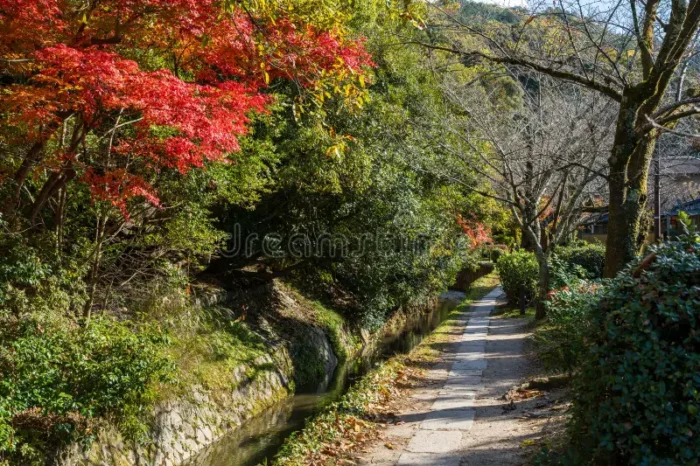
The Philosopher’s Path is one of Kyoto’s most beloved walking routes, especially during autumn. Stretching about two kilometers along a quiet canal, this path is lined with maple trees that turn soft shades of red, orange, and gold as fall sets in.
Unlike temple grounds, the Philosopher’s Path feels informal and lived-in. Locals walk their dogs, travelers pause on benches, and small cafés quietly blend into the scenery. Autumn leaves drift into the canal, creating a constantly changing landscape that feels calm and intimate.
This walk is best enjoyed slowly. There’s no entrance fee, no strict route, and no rush. It’s a place to reflect, observe daily life, and enjoy the subtle beauty of Kyoto in autumn. The path also connects easily to nearby temples like Honen-in and Ginkaku-ji, making it a natural backbone for your foliage itinerary.
Why it stands out: Gentle beauty, peaceful atmosphere, and a perfect balance between nature and everyday Kyoto life.
4. Honen-in Temple
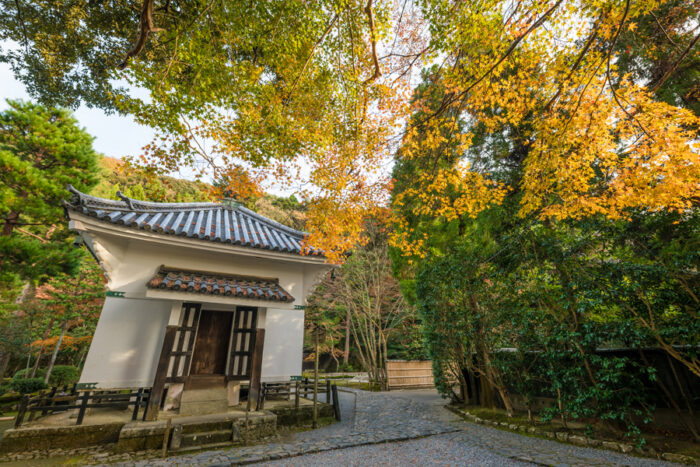
Honen-in Temple is one of Kyoto’s quiet treasures, especially rewarding for travelers seeking a less crowded autumn experience. Tucked away near the Philosopher’s Path, this small temple is known for its moss-covered grounds and natural, untouched beauty.
In autumn, fallen maple leaves scatter across mossy paths and stone steps, creating a scene that feels organic and unstyled. Unlike larger temples, Honen-in doesn’t feel curated—it feels real. The simplicity of the space allows the autumn colors to blend gently into the surroundings rather than overpower them.
Because Honen-in is free to enter and often overlooked, it’s an excellent place to pause, breathe, and enjoy the quieter side of Kyoto. The temple’s entrance path, framed by trees, is especially beautiful after a light rain.
Why it stands out: Crowd-free serenity, natural beauty, and a deeply calming atmosphere.
5. Ginkaku-ji (Silver Pavilion)
Ginkaku-ji, or the Silver Pavilion, offers a refined and understated autumn experience. Unlike its golden counterpart, this temple is celebrated for its minimalist design and carefully composed gardens that feel especially harmonious during fall.
The walking path through Ginkaku-ji’s grounds gradually ascends, offering layered views of autumn foliage framed by raked sand gardens, ponds, and traditional structures. The maple trees here glow softly rather than dramatically, complementing the temple’s quiet elegance.
Autumn is an ideal time to visit because the cooler weather makes the garden walk comfortable, and the seasonal colors enhance the contemplative mood of the space. From the upper viewpoint, you’ll get a beautiful overview of the temple and surrounding neighborhood.
Why it stands out: Subtle beauty, thoughtful design, and a calm, meditative walking route.

6. Tofukuji Temple
Tofukuji Temple delivers one of the most dramatic autumn foliage views in Kyoto. Famous for its Tsutenkyo Bridge, this temple offers a breathtaking perspective where thousands of maple trees fill the valley below in vibrant shades of red.
Standing on the bridge during peak season feels like looking out over a living sea of autumn color. The scale is impressive, and the experience is unforgettable. Despite its popularity, Tofukuji’s large grounds help disperse crowds once you move beyond the bridge.
The temple complex also includes gardens and sub-temples that provide quieter spaces to enjoy fall colors at a slower pace. Visiting early in the morning is highly recommended for the best light and fewer people.
Why it stands out: Unmatched panoramic foliage views and one of Kyoto’s most iconic autumn scenes.
7. Kiyomizu-dera Temple
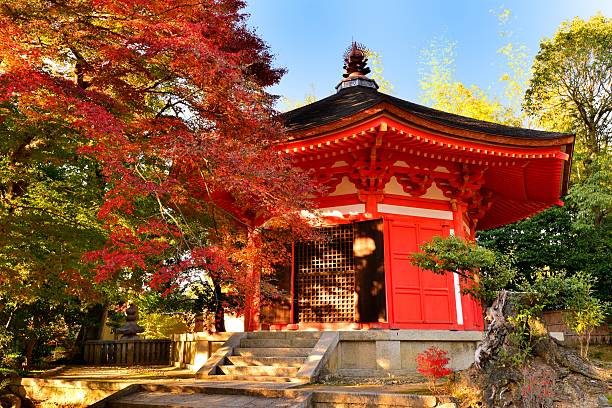
Kiyomizu-dera Temple is one of Kyoto’s most famous landmarks, and in autumn, it becomes even more spectacular. Built on wooden stilts, the temple’s main hall offers sweeping views of maple-covered hillsides below.
During fall, the contrast between the bright foliage and the temple’s dark wooden structure creates stunning visual depth. The surrounding Higashiyama area is equally charming, with sloping streets, traditional shops, and seasonal snacks adding to the experience.
Autumn evenings are especially magical when the temple hosts seasonal illuminations, transforming the landscape into a glowing sea of color. While it can be busy, visiting early or later in the day helps avoid peak crowds.
Why it stands out: Elevated views, iconic architecture, and a complete autumn atmosphere.
8. Kodai-ji Temple
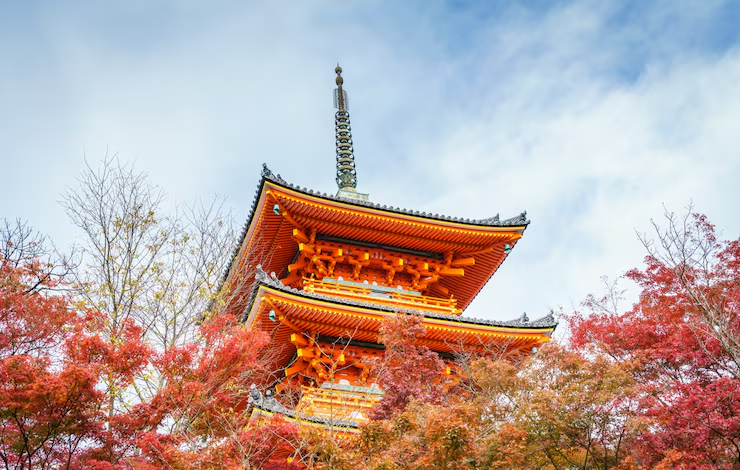
Kodai-ji Temple is known for its intimate size and refined beauty, making it a favorite for travelers seeking a more romantic autumn experience. Its landscaped gardens, ponds, and bamboo grove feel especially atmospheric when framed by fall colors.
During autumn, Kodai-ji hosts evening illuminations that softly light the gardens and reflect autumn leaves in still water. The experience feels quiet, elegant, and deeply immersive—very different from larger temple complexes.
Kodai-ji is easy to combine with an evening stroll through Gion or nearby streets, making it a lovely stop toward the end of your day.
Why it stands out: Romantic lighting, elegant gardens, and a peaceful nighttime atmosphere.
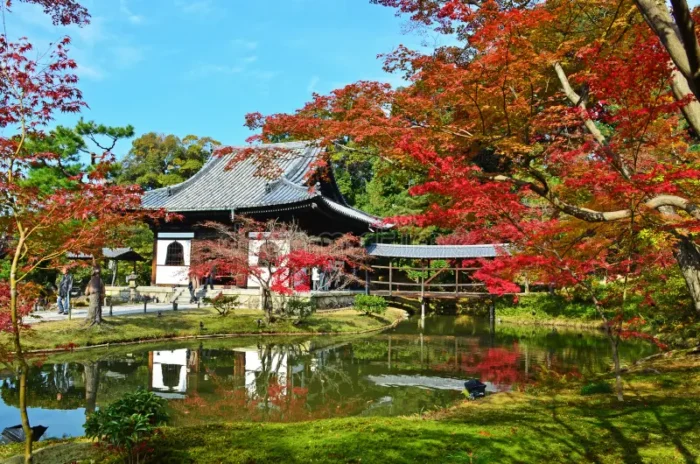
9. Arashiyama Park (Maple Grove Area)
While Arashiyama is famous for its bamboo grove, the park’s maple-filled areas are just as rewarding in autumn. Along the riverbanks and near walking paths, maple trees turn brilliant shades of red and gold, creating a scenic contrast with the flowing water.
The atmosphere here feels open and refreshing, especially compared to inner-city temples. You can enjoy leisurely walks, riverside views, and nearby cafés while soaking in the seasonal beauty.
Arashiyama is ideal for travelers who want to combine nature with relaxation. Visiting early in the morning allows you to enjoy the scenery before tour crowds arrive.
Why it stands out: Riverside autumn scenery, open space, and a relaxed pace.
10. Togetsukyo Bridge
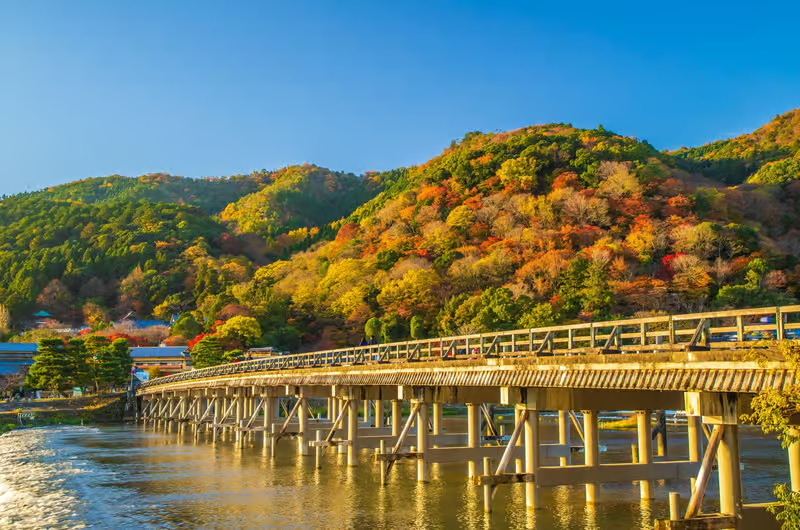
Togetsukyo Bridge is the perfect place to end an autumn foliage walking day. Stretching across the Katsura River, the bridge offers panoramic views of mountains painted in autumn colors.
In fall, reflections of red and gold leaves shimmer on the water, creating a calm, cinematic scene. The area feels especially peaceful in the early morning or just before sunset.
Nearby paths and viewpoints allow you to linger, take photos, or simply sit and enjoy the moment. It’s a gentle, unhurried way to close your Kyoto autumn experience.
Why it stands out: Wide-open views, seasonal reflections, and a serene finale to your walk.
Budget Planning for the Walking Tour
- Temple entry fees: ¥300–¥600 per temple
- Guided walking tours: $40–$90 (via Viator)
- Food & snacks: ¥1,000–¥2,000 for the day
Guided tours are especially helpful if you want historical context, hidden viewpoints, and efficient routing.
Is This Experience Right for You?
Solo Travelers
Perfect for solo exploration. The calm pace, safe streets, and reflective atmosphere make this one of the best solo travel experiences in Japan.
Couples
Autumn Kyoto is incredibly romantic. Hand-in-hand walks, glowing temples, and quiet cafés make it ideal for couples and honeymooners.
Families & Groups
The walking routes are gentle and flexible. Kids enjoy the colors, while older travelers appreciate benches, cafés, and frequent rest spots.
We have created a 3 days itinerary covering all the must visit spots in detail:
Day 1: Northern Kyoto – Serene, Scenic, and Stunning
1. Kinkaku-ji (Golden Pavilion)
Time: 9 AM
Entry Fee: ¥500 (\$3.50)
Highlights: A golden temple reflecting in a mirror pond, maple trees surrounding it
📸 Photo Tip: Stand at the far left corner of the pond for the best wide shot
2. Ryoan-ji Zen Garden
Walk: 15 mins
Entry Fee: ¥600
Highlights: Famous rock garden with autumn foliage framing the serene space
3. Philosopher’s Path
Taxi/Bus to Ginkaku-ji → Walk along the path (1.5 km)
Highlights: Lined with maple and cherry trees, quiet tea houses
4. Ginkaku-ji (Silver Pavilion)
Entry Fee: ¥500
Don’t miss: The moss garden in peak fall color
🍱 Lunch Suggestion: Omen Restaurant near Ginkaku-ji — try Kyoto-style udon!
Day 2: Arashiyama – Where Nature Meets Tradition
1. Arashiyama Bamboo Grove
Time: 7 AM
Free Entry
Highlights: Quiet, mystical vibe in the early morning
2. Tenryu-ji Temple Garden
Entry Fee: ¥800 (with garden)
Rich in fiery red momiji trees surrounding a pond
3. Togetsukyo Bridge & Riverside Walk
Great for photos with mountain backdrop covered in foliage
4. Monkey Park Iwatayama (optional)
Small hike, big reward—view over colorful Kyoto from above
Entry Fee: ¥600
🍡 Snack Tip: Try the fresh yatsuhashi (cinnamon mochi) at souvenir stalls
Day 3: Southern Higashiyama & Gion: Tradition in vivid colour
1. Kiyomizu-dera Temple
Time: 8 AM
Entry Fee: ¥400
Highlights: Temple on stilts with a full panoramic view of red and gold treetops
2. Sannenzaka & Ninenzaka Slopes
Cobbled lanes adorned with intact wooden cottages, ideal for souvenirs.
3. Maruyama Park + Chion-in Temple
A quiet haven in late afternoon
Optional: Attend a short Zen meditation session
4. Yasaka Shrine at Dusk
Free Entry
Lanterns lit in the evening — beautiful end to the day
Tea Stop: Visit a teahouse for matcha and wagashi with a garden view
How to Get Around
Walk as much as possible! Kyoto is extremely walkable
Use an ICOCA or Suica card for buses/trains
Taxis available, but avoid during rush hours
Download the NAVITIME Japan Travel App or Google Maps with Offline Mode for smooth navigation
Bonus: Best Photo Spots
| Location | Best Time | What to Capture |
| Kiyomizu-dera | Morning | Panoramic city views |
| Arashiyama Bridge | Sunset | River and red mountains |
| Eikando Temple | Evening | Illuminated Evening Foliage |
| Philosopher’s Path | Early Morning | Reflections in the canal |
Final Tips
Book accommodations early — autumn is high season
Many temples offer evening illuminations in late Nov—check schedules
Try local seasonal treats: chestnut, sweet potato, roasted green tea
Recommended: Stay in Gion or Kawaramachi for walkable access and local charm
Suggested Travel Gear for Autumn in Kyoto
