
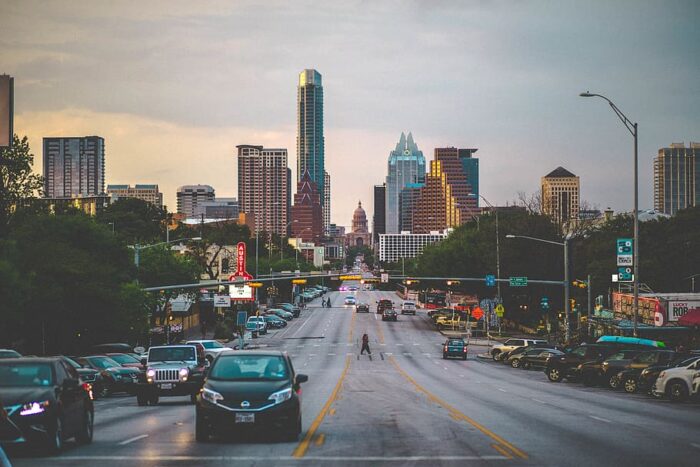
Austin is shaped by everyday life rather than spectacle. The city feels practical and expressive at the same time, office buildings share space with food trucks, green corridors cut through commercial districts, and music exists as part of the background rather than a performance. Its character becomes clear through observation, not explanation.
For first-time visitors, Austin is approachable without feeling simplified. For those returning, the appeal lies in its shifting details: neighborhoods that change tone by block, familiar places experienced differently at another hour, and routines that feel open to participation. This guide is designed to help you understand how Austin fits together: where to go, how to move through it, and how to experience the city without forcing structure onto it.
How to Reach Austin
By Air
Austin Bergstrom International Airport (AUS) sits about 8 miles from downtown. Rideshares and taxis provide direct access, while public buses connect the airport to central areas at a lower cost. Travel time into the city generally stays under 25 minutes outside peak hours.
By Train
Amtrak’s Texas Eagle service connects Austin with cities such as Dallas, San Antonio, and Chicago. The station is located near downtown, making onward travel simple without a car.
By Road
Austin is well-connected via Interstate 35, running north–south through the city. Intercity buses operate frequent routes from Houston, Dallas, and San Antonio. Driving offers flexibility, especially for exploring areas beyond the urban core.
Key Places and Experiences Across Austin
Barton Springs Pool
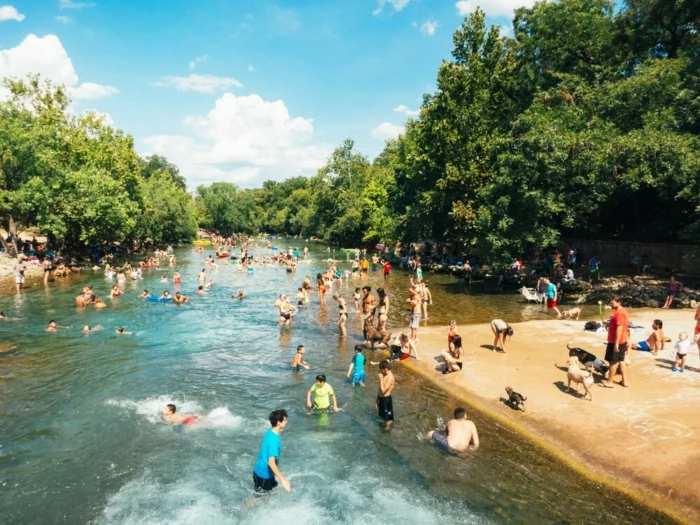
Set within Zilker Park, Barton Springs operates as part of Austin’s daily routine rather than a standalone attraction. Mornings bring regular swimmers, afternoons fill with families and students, and the atmosphere stays unforced throughout. The spring-fed water keeps the space grounded and functional, more communal than recreational.
Why visit: It reflects how Austin blends public space, nature, and everyday life without separating locals from visitors.
Time needed: 1.5–2 hours
Cost: $4-$9
Lady Bird Lake
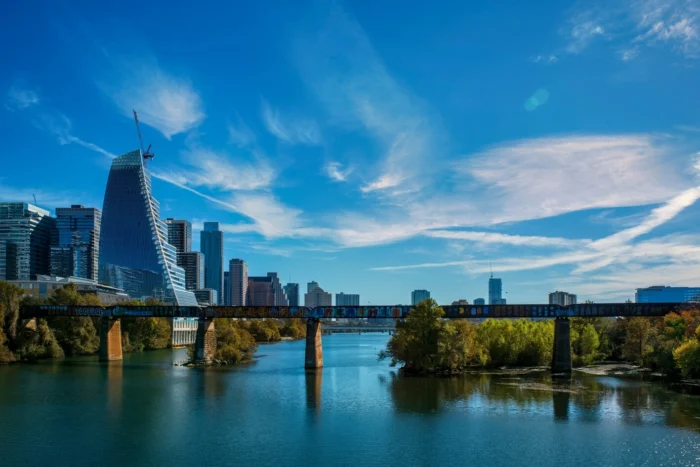
Encircled by well-used trails and framed by Austin’s restrained skyline, Lady Bird Lake shows how the city functions when work, recreation, and routine overlap. Office workers pass joggers, cyclists move alongside families, and kayaks drift through it all without the space feeling divided or staged. It’s less about scenery and more about observing how people share the city comfortably.
Why visit: It offers a clear sense of Austin’s everyday rhythm, where outdoor space fits naturally into daily schedules.
Time needed: 1–2 hours
Cost: Free to walk or relax; kayak or paddleboard rentals typically range from $15–$30 per hour depending on provider and time of day.
Texas State Capitol
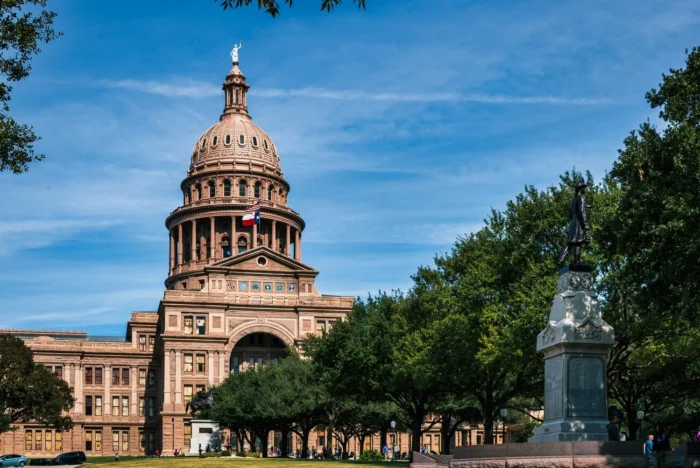
Despite its size, the Texas State Capitol feels accessible rather than imposing. Visitors move freely between the interior halls and the surrounding grounds, where residents read, walk, or pause between errands. The building’s role as a working seat of government gives it relevance beyond architecture, while its openness keeps the experience grounded and unceremonious.
Why visit: It connects Austin’s contemporary identity to the civic structures that continue to shape it.
Time needed: 1–1.5 hours
Cost: Free
Mount Bonnell
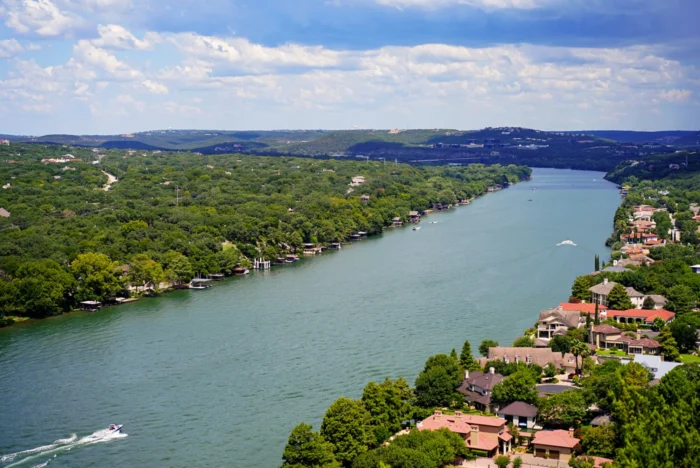
This elevated overlook sits just far enough from the city’s center to create distance without detachment. From the top, the Colorado River, layered neighborhoods, and tree cover offer a clear sense of Austin’s physical layout. It’s a place people visit briefly but remember clearly, not for activity but for perspective.
Why visit: It helps contextualize the city by showing how landscape shapes its development and scale.
Time needed: 30–45 minutes
Cost: Free
South Congress Avenue
South Congress Avenue reflects Austin’s tendency to change without fully resetting itself. Long-established shops operate alongside newer cafés and boutiques, creating a street that feels active but not manufactured. The mix encourages wandering rather than targeting specific stops, with small details: signage, conversations, storefront rhythms, carrying more weight than any single attraction.
Why visit: It shows how Austin evolves in public view while retaining everyday continuity.
Time needed: 1.5–2 hours
Cost: Free to explore
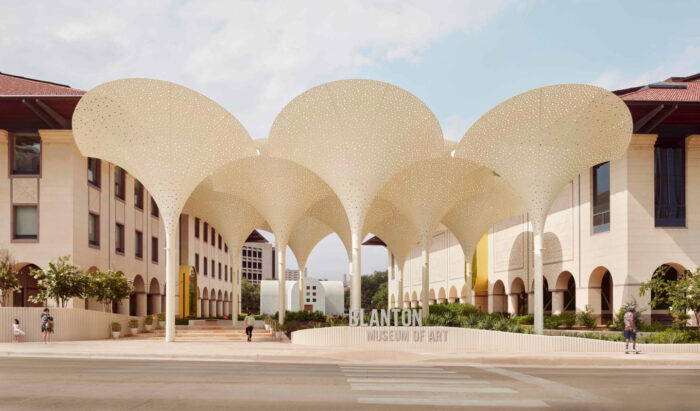
Blanton Museum of Art
Located on the University of Texas campus, the Blanton Museum of Art maintains a calm, considered presence. The galleries are arranged to encourage attention rather than quick consumption, allowing visitors to spend time with individual works without distraction. Its setting within an academic environment reinforces a sense of purpose and continuity rather than spectacle.
Why visit: It adds depth to an Austin visit by offering cultural and intellectual context alongside the city’s outdoor and social spaces.
Time needed: 1.5–2 hours
Cost: $15 adults · $12 seniors · $8 youth/students · Free for children under 6 and UT-Austin ID holders; free entry on Tuesdays
Neighborhood Experiences You Shouldn’t Skip
East Austin
Creative work and community history overlap naturally here. Murals sit beside long-running businesses, while food trucks and small galleries operate as part of daily life rather than destinations.
Why it’s worth visiting: It reflects Austin’s cultural direction as it’s actively forming, not after it’s been packaged.

Hyde Park
Tree-lined streets and early-20th-century homes give this area a steady, residential tone. Cafés and parks serve locals first, which keeps the neighborhood grounded.
Why it’s worth visiting: It shows how Austin feels when it’s not performing for visitors.

South Lamar
Independent theaters, bars, and casual restaurants define this corridor without overwhelming it. The area stays active without feeling crowded or overdesigned.
Why it’s worth visiting: It balances nightlife with routine, offering social energy that still
Best Food to Try in Austin (Must-Eats)
· Breakfast tacos: ($3–$5) often found at small counters away from central districts
· Central Texas barbecue: ($9–$16) lines are common, quality is consistent
· Tex-Mex plates: ($6–$11) comfort-driven and filling
· Food truck meals: ($3–$7) diverse and experimental
· Craft coffee: ($3–$5) strong local roasting culture
· Live-music venues with kitchens: ($8–$13) food paired with sound
Many of Austin’s best meals exist outside obvious visitor zones, rewarding short detours.
Austin Itinerary (4–5 Days Recommended)
Day 1
Central Austin offers a clear sense of how the city is organized, moving naturally between the Texas State Capitol, surrounding streets, and the trails along Lady Bird Lake. The experience stays flexible, with space to pause, observe, and follow what holds your attention rather than moving on quickly.
Estimated spend: $30–$36 (meals and local transport)
Tip: Plan for walking, but leave room to stop when something draws you in.
Day 2
Zilker Park and Barton Springs set the tone, grounding the day in shared green space before South Congress adds contrast through storefronts, cafés, and street life. The shift between the two highlights how easily Austin moves between open landscape and active streets.
Estimated spend: $33–$39 (entry fees, meals)
Tip: Water and sun protection go a long way, even on days that don’t feel extreme.
Day 3
East Austin unfolds through food, small creative spaces, and conversations that tend to linger. Plans often adjust themselves here, shaped by recommendations and chance discoveries rather than fixed stops.
Estimated spend: $39–$44 (meals, local transport)
Tip: Ask where people eat nearby, you’ll often get better answers than online lists.
Day 4
The Blanton Museum and Hyde Park introduce a quieter register. Art, residential streets, and cafés create a day built around attention rather than movement.
Estimated spend: $28–$33 (museum entry, food)
Tip: Areas near the university offer reliable, reasonably priced dining.
Day 5 (Optional)
Mount Bonnell provides perspective through landscape, while South Lamar brings the trip back into the city’s social current with music and casual dining. It works best without overplanning.
Estimated spend: $22–$28 (food, transport)
Tip: Keep the schedule loose, some of the best moments arrive unplanned.
Overall Budget Summary (Per Person, Excluding Flights)
Daily average: $31–$39
Total (4–5 days): $120–$190
Accommodation ranges:
Budget: $22–$39 per night
Mid-range: $66–$99 per night
Where to Stay in Austin
Downtown
Staying downtown keeps most major sights, trails, and transit connections within easy reach. It suits travelers who prefer walking between activities and having dining options close by.
South Congress Area
This area offers a balance of shopping, cafés, and local restaurants, with straightforward transport into the city center. It works well for visitors who want activity nearby without staying in the densest part of the city.
East Austin
Known for its creative and cultural presence, East Austin provides a more local feel while remaining accessible by rideshare or short drives. It’s a good choice for travelers who value neighborhood character over proximity to landmarks.
Conclusion
Austin is best understood through attention rather than structure. When plans stay flexible, the city reveals itself in small interactions, shared spaces, and ordinary routines that feel quietly distinctive. Its identity isn’t confined to landmarks but shaped by what happens between them. What stays with you isn’t what you scheduled, but what happened when nothing was planned.
